Grooming Tips for Your Wirehaired Vizsla: Coat Care & Maintenance
If you’ve ever run your hand across a Wirehaired Vizsla’s dense, bristly coat, you already know it’s one of the breed’s most distinctive features. That textured, weather-resistant coat is not just for looks—it was designed to protect them in rough fields, cold wind, and thick brush. At Pivot Kennels, we often remind new owners that proper grooming isn’t about vanity. It’s about preserving coat function, protecting skin health, and keeping your dog comfortable in every season.
In this guide, we’ll walk you through everything you need to know about Wirehaired Vizsla grooming—from brushing and hand-stripping to beard care and seasonal maintenance. Whether you’re a new owner or simply looking to refine your routine, these practical tips will help you confidently care for your dog’s coat.
Understanding the Wirehaired Vizsla Coat
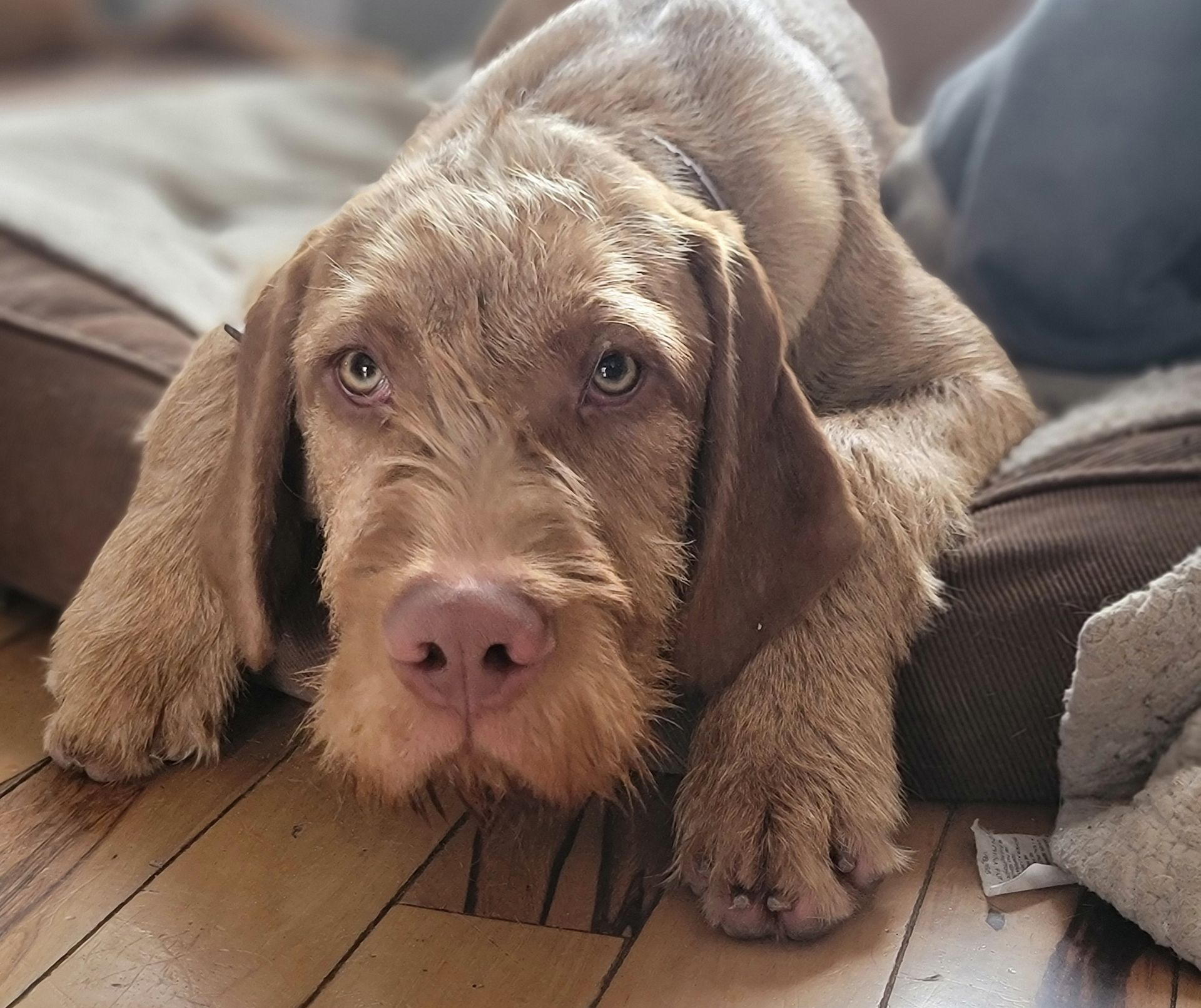
Before diving into grooming techniques, it’s important to understand what makes this coat unique. The Wirehaired Vizsla has a dense, wiry outer coat and a softer undercoat that provides insulation. Unlike smooth-coated breeds, their fur doesn’t lie flat against the body. Instead, it creates a protective barrier that shields them from thorns, moisture, and cold temperatures.
This coat type requires maintenance to remain functional. When neglected, the outer coat can soften, mat, or trap debris. Regular care helps preserve its proper texture and ensures your dog continues to benefit from the natural protection the coat was designed to provide.
How Often Should You Groom a Wirehaired Vizsla?
One of the most common questions we hear at Pivot Kennels is, "How often should I groom my Wirehaired Vizsla?" The answer depends on activity level, environment, and whether your dog participates in shows or fieldwork.
In general:
- Brushing: 1–2 times per week
- Hand-stripping: Every 3–4 months (or as needed)
- Bathing: Every 6–8 weeks or when dirty
- Nail trimming: Every 3–4 weeks
- Ear cleaning: Weekly check, clean as needed
Consistency matters more than frequency. A predictable routine prevents buildup, tangles, and skin irritation.
Brushing: The Foundation of Coat Care
Brushing is the simplest and most effective grooming habit you can develop. A slicker brush or medium-bristle brush works well to remove loose hair, dirt, and small debris that may cling to the wiry coat. Because these dogs love outdoor adventures, you may find burrs or grass seeds after hikes or field time.
Brushing also stimulates natural oils that keep the coat healthy. Even a 10-minute brushing session can improve coat texture and shine. More importantly, it gives you time to check for cuts, ticks, or skin irritation hidden beneath the coarse outer layer.
Hand-Stripping vs. Clipping: What’s Best?
One of the most important grooming decisions involves whether to clip or hand-strip the coat. Hand-stripping removes dead outer hairs by pulling them gently from the follicle. This preserves the coat’s wiry texture and keeps it functional for field protection.
Clipping, on the other hand, cuts the hair instead of removing it at the root. Over time, clipping can soften the coat and diminish its weather-resistant quality. For owners who want to maintain true breed texture, hand-stripping is typically preferred. If you’re unsure how to start, many breeders—including us at Pivot Kennels—are happy to guide new owners.
Beard and Eyebrow Maintenance
That expressive beard and bushy eyebrow look is part of what makes this breed so charming. However, these facial furnishings require extra attention. Food, water, and outdoor debris can collect easily in the beard area.
A quick wipe after meals and brushing the beard several times per week helps prevent odor and matting. Trim lightly only if necessary, especially if your dog is not being shown. Keeping the facial hair clean not only preserves appearance but also reduces bacteria buildup near the mouth.
Bathing: Less Is More
Because the Wirehaired Vizsla coat has natural protective oils, frequent bathing can strip these oils and dry the skin. That’s why most adult dogs only need a bath every 6–8 weeks, unless they’ve rolled in something particularly messy.
Use a gentle, dog-specific shampoo formulated for wire coats. Avoid heavy conditioners that may soften the coat texture. After bathing, allow the coat to air dry or use low heat to prevent damaging the hair structure.
Nail, Ear, and Skin Care
Coat care is only one part of proper grooming. Active dogs like Wirehaired Vizslas can still develop long nails if they primarily exercise on soft ground. Keeping nails trimmed protects joint alignment and prevents discomfort.
Their ears should be checked weekly for debris or moisture buildup, especially after swimming or hunting trips. A gentle ear cleaner and cotton pad usually suffice. Always monitor skin for redness, flakiness, or irritation, as thick coats can sometimes hide minor issues until they become noticeable.
Seasonal Grooming Considerations
Wirehaired Vizslas experience moderate seasonal shedding. During spring and fall, you may notice increased hair loss as the undercoat adjusts to temperature changes. This is a great time to increase brushing frequency.
In colder months, avoid over-bathing, as natural oils help insulate against winter conditions. During summer, regular brushing helps airflow reach the skin, reducing the risk of overheating. Grooming routines should adapt with the seasons to maintain coat health year-round.
Grooming and Bonding: More Than Maintenance
Grooming is not just a chore—it's a relationship builder. When you handle your dog regularly, they become more comfortable with touch and inspection. This makes vet visits, training sessions, and overall care much easier.
At Pivot Kennels, we introduce gentle grooming early in puppyhood so dogs associate it with positive experiences. Starting young helps prevent resistance later and creates a calm, cooperative adult dog.
Quick Grooming Checklist for Busy Owners
For quick reference, here’s a simplified maintenance plan designed to help you stay consistent:
Weekly:
- Brush coat
- Check ears
- Wipe beard
- Inspect paws
Monthly:
- Trim nails
- Check coat texture
- Evaluate need for a bath
Quarterly:
- Hand-strip coat if needed
- Deep ear cleaning
- Full skin inspection
Following a structured checklist makes grooming manageable and prevents small issues from becoming larger problems.
Proper coat care and maintenance keep your Wirehaired Vizsla comfortable, protected, and looking their best. A consistent grooming routine supports skin health, preserves coat function, and strengthens your bond with your dog. If you ever have questions about grooming techniques or are considering welcoming a Wirehaired Vizsla into your home, reach out to Pivot Kennels—we're always happy to help you get started.