Grooming The Wirehaired Vizsla
GROOMING WIREHAIRED VIZSLAS
(AND THEIR COAT TYPES)
A question we get often, "What is the Wirehaired Vizsla's coat like and how do you groom them?"
It is not as harsh of a wirehair as a GWP, nor is it a soft coat, but still a pleasant, coarse coat to pet and groom. Coat type in a wirehaired vizsla can be short, medium, thick and long. I put in thick as there are some coats that need monthly grooming (like a thick but not necessarily a long coat) and some coats only need grooming one or two times per year. Some hunting wirehairs that are very active, rarely need to be stripped as their soft wirehair is stripped naturally from briars, brush, brambles, or branches.
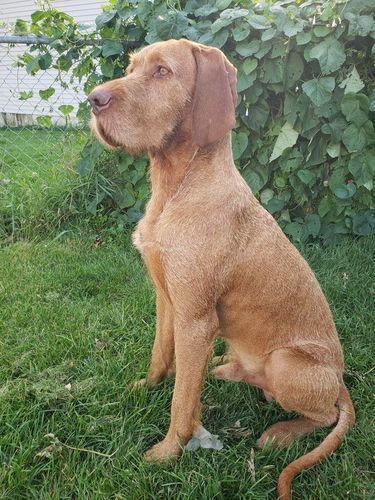
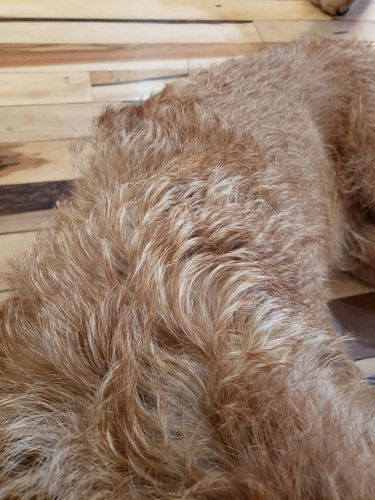
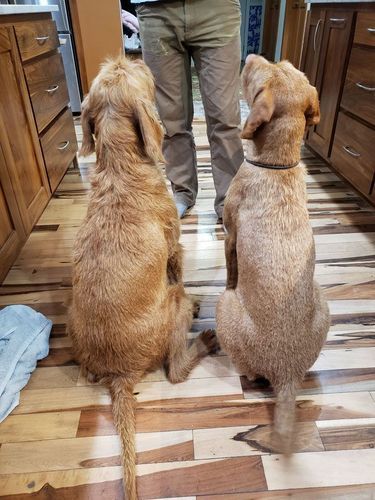
Delceg has a short harsh coat - needs grooming 1x/year
Ernie has a thick medium coat and needs grooming every 3-4 months
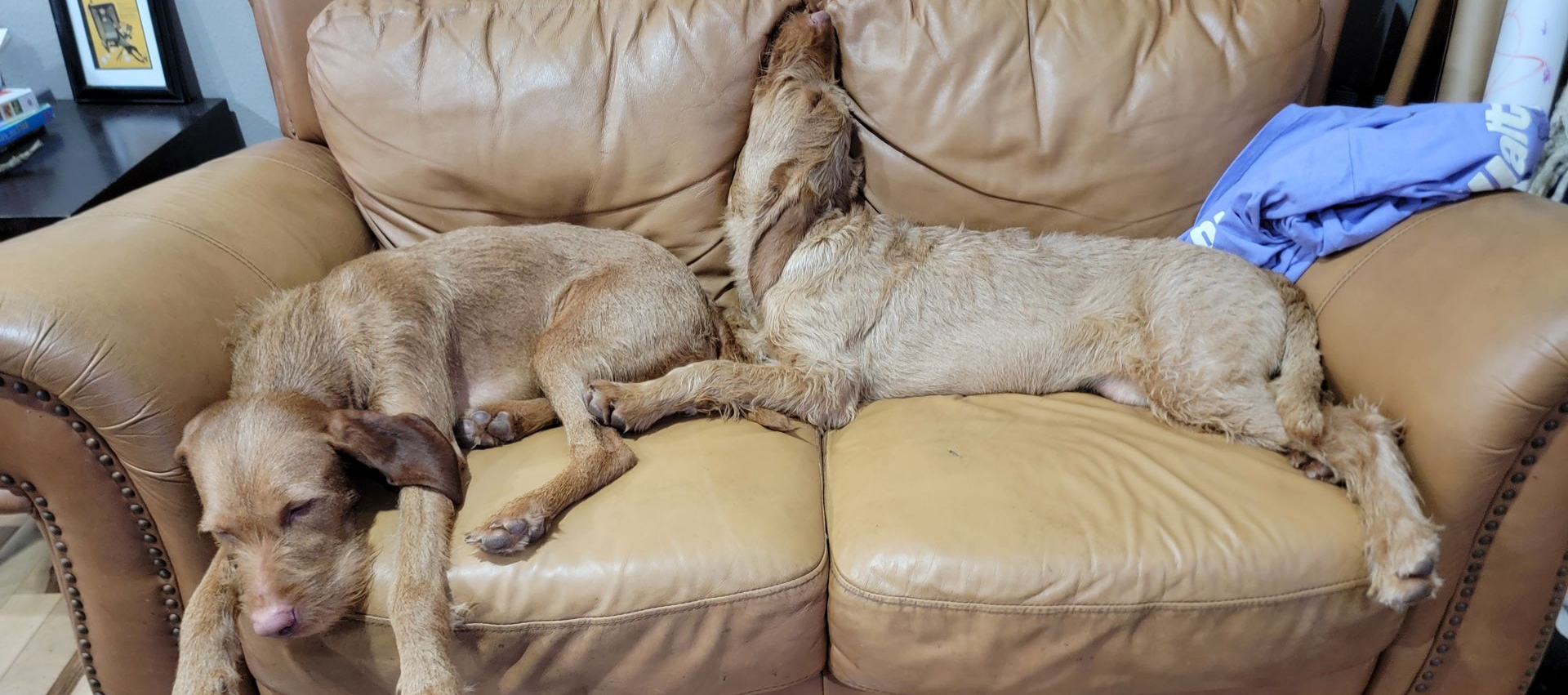
Side by side: Quill (Left) who has a long coat and Odessa (Right) has a short, thick coat. Both need grooming 2x/year
Wirehair has 4 life cycles. When the dog has never been stripped, all the hair on the dog is at the end of its life cycle (all soft and dead). When you strip this type of dog you end up with a bald looking dog as there are no hairs in the first 3 cycles of their life. Dog owners don't always understand this and will freak out - your dog will grow his wirehair back! All you need to do is maintain his healthy coat once it grows in.
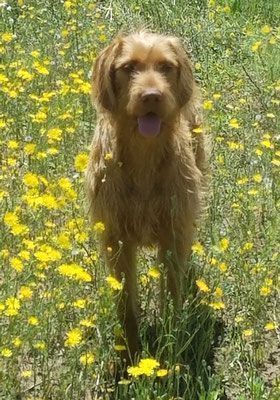
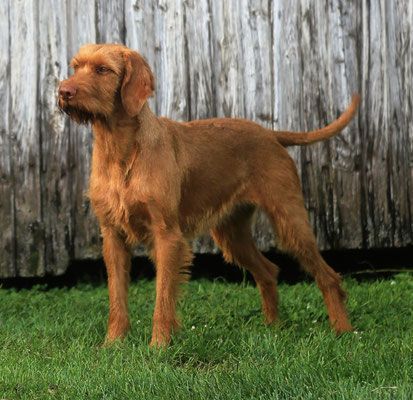
Quill: 1 yr old, never been stripped, very soft, and more blond than red
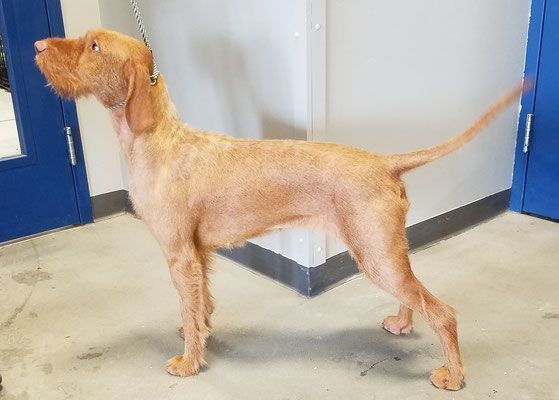
Quill: After a being stripped for the first time (took 2 weeks of hand stripping)
Quill: 6 months after initial stripping with maintained coat. More red, course, and manageable.
To groom a wirehair, you want to strip the dead (soft, sometimes blond) wirehair from the coat with your fingers, stripping tool (such as the Furminator) or stripping knives. (Blog Post to come on different grooming tools!) We prefer using our fingers or stripping knives. Each coat may require different stripping knives. A stripping knife that works on a medium coat may not work on a short coat. NEVER cut a wirehair’s coat! The purpose of a wirehaired coat is to protect your wirehair’s skin from the environment and regulate temperature. A good wirehair coat protects them from burs, twigs, prickers, sharp grass when hunting. When the coat is cut, the wirehairs cut doesn’t leave room for the new wirehairs to grow in. When cut, the coat can become soft, curly, or frizzy and hand stripping can become painful.
An ungroomed or cut wirehair coat creates a coat that isn’t healthy for the dog. Without a proper coat or grooming, wirehairs can develop what appears to be skin allergies or sores due to poor or lack of grooming. Matting can occur causing sores or moisture/debris gets trapped in the soft undercoat causing skin conditions.
If you are not committed to grooming your wirehairs coat properly; you could find a professional groomer for the care of your wirehair. When looking for a groomer, interview them to make sure they know how to groom a wirehair coat. We hope that understanding proper grooming of a wirehair coat helps you decide if this is the right breed for you.
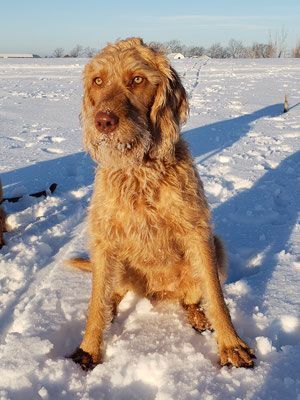
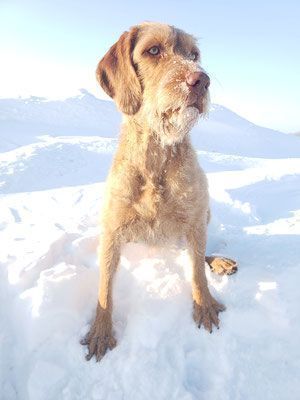
Kolibri: Not stripped/Maintained
Kolibri: After a couple grooming sessions
Here are also some tips for grooming your wirehair:
- Strip a dirty dog! A freshly bathed wirehair doesn’t have the grip or oils to assist you with proper stripping. When our dogs need baths (not often!) that’s when I know I should see if any of them need a quick grooming session.
- Start with a good brushing or use a shedding comb.
- Use of a shedding comb against the grain is ok, never use a stripping knife against the grain.
- Use a furminator next or larger carving stripping knife. It is up to preference. I prefer stripping knives, hey are less expensive than a furminator (you can get 2-4 stripping knives for the price of one furminator).
- If you use a carving knife, run it parallel on the body against the skin to strip out the soft wirehair.
- You can strip a very soft wirehair face - be gentle, if the hair is not coming out with gentle pulls, then it's not ready. Use your fingers to hand strip when you are around the face.
- For legs or harder to reach places you can use a small, detail stripping knife or hand strip.
- To assist with hand stripping you can get a rubber finger tip cover.
While there is more information for stripping, lets take it one dose at a time. We have more posts with grooming to come. You can also check out our quick WHV grooming video: https://www.youtube.com/watch?v=T6tm4v2rNA4
At Pivot Kennels, we encourage and advocate for all our puppy owners to properly groom their WHV. We are here to help educate and guide with any needs of grooming your wirehaired vizsla.
Thank you to all the friends, groomers, handlers, breeders, and whv owners who have taken the time to educate us. Without you, we wouldn't be able to pay it forward!
Take a look at these websites if you would like more references or resources:
https://thepetretreat.co.uk/blog/wiry-coat-grooming-guide/
http://germanwirehair.blogspot.com/2008/06/grooming-your-german-wirehair-pointer.html
https://groomarts.com/blogs/2019/why-you-shouldnt-clip-a-wire-haired-coat
https://www.awpga.com/grooming-out-the-puppy-coat.html