Is the Wirehaired Vizsla Hypoallergenic? Debunking Myths About Their Coat
If you are considering bringing a Hungarian Wirehaired Vizsla into your home, you may have wondered whether this breed is hypoallergenic. It is an especially important question for families who love dogs but have allergies or sensitivities to pet dander. The short answer is that Wirehaired Vizslas are not considered a truly hypoallergenic dog breed, even though their wiry coat may lead some people to believe otherwise. Understanding how their coat works, what actually causes dog allergies, and how grooming can help will give you a much clearer idea of what living with one may be like.
Is a Wirehaired Vizsla Hypoallergenic?
A Wirehaired Vizsla is not hypoallergenic in the strict sense of the word. Like other dogs, Hungarian Wirehaired Vizslas produce proteins that can trigger allergic reactions in sensitive people, and these proteins can be found in dander, saliva, urine, and other sources. The coat itself is not necessarily the thing causing the allergy, although hair can carry dander and other allergens around the home. This means that having a shorter, wiry, or different type of coat does not automatically make a dog safe for someone with allergies.
What Does "Hypoallergenic" Actually Mean?
The word hypoallergenic can be misleading because it does not mean completely allergen-free. In dogs, the term is generally used to describe breeds that may produce or spread fewer allergens than others, but no dog breed can be guaranteed to cause no allergic reaction. Allergies can also vary considerably from one person to another. Someone may react strongly to one individual dog but experience fewer symptoms around another dog of the same breed, which is one reason spending time with the specific dog or breed before bringing a puppy home can be helpful.
What Actually Causes Dog Allergies?
Many people assume that dog hair is the primary cause of allergies, but the situation is more complicated. Allergic reactions are usually triggered by proteins associated with a dog's skin flakes, saliva, urine, and other biological materials rather than the hair itself. When a dog sheds, grooms itself, scratches, or moves around the house, these allergens can become attached to hair, bedding, furniture, carpets, and clothing. For an allergy-sensitive household, understanding this distinction is important because simply choosing a dog with a different-looking coat does not eliminate exposure.
This is also why a Wirehaired Vizsla's wiry coat should not be viewed as an allergy-free solution. The dense coat can hold skin debris and environmental material just as any other coat can, even if the texture and appearance are very different from the smooth coat of other breeds. Regular grooming can help remove loose hair and debris before they accumulate around the home, but grooming does not remove the proteins that cause allergies entirely. In other words, coat maintenance can help manage allergens, but it should not be confused with making a dog hypoallergenic.
Understanding the Wirehaired Vizsla Coat
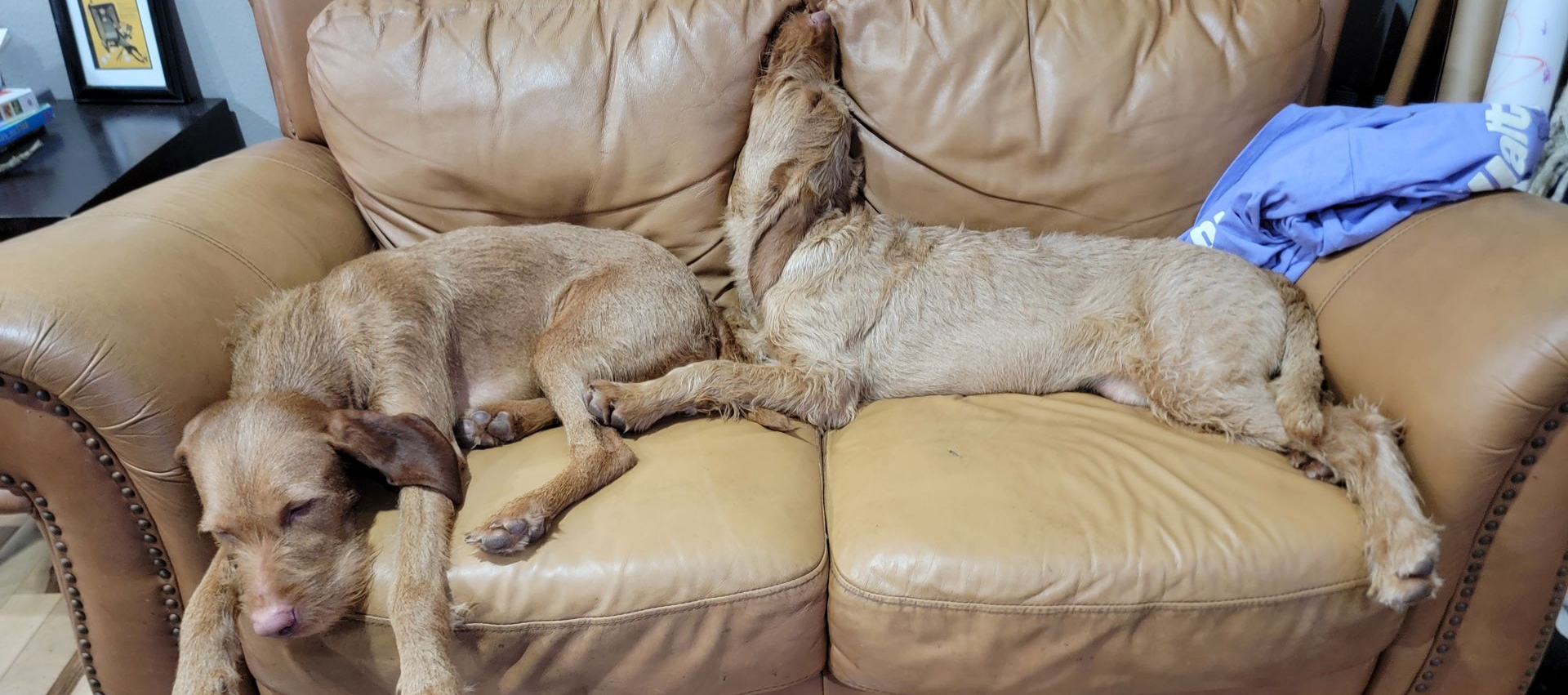
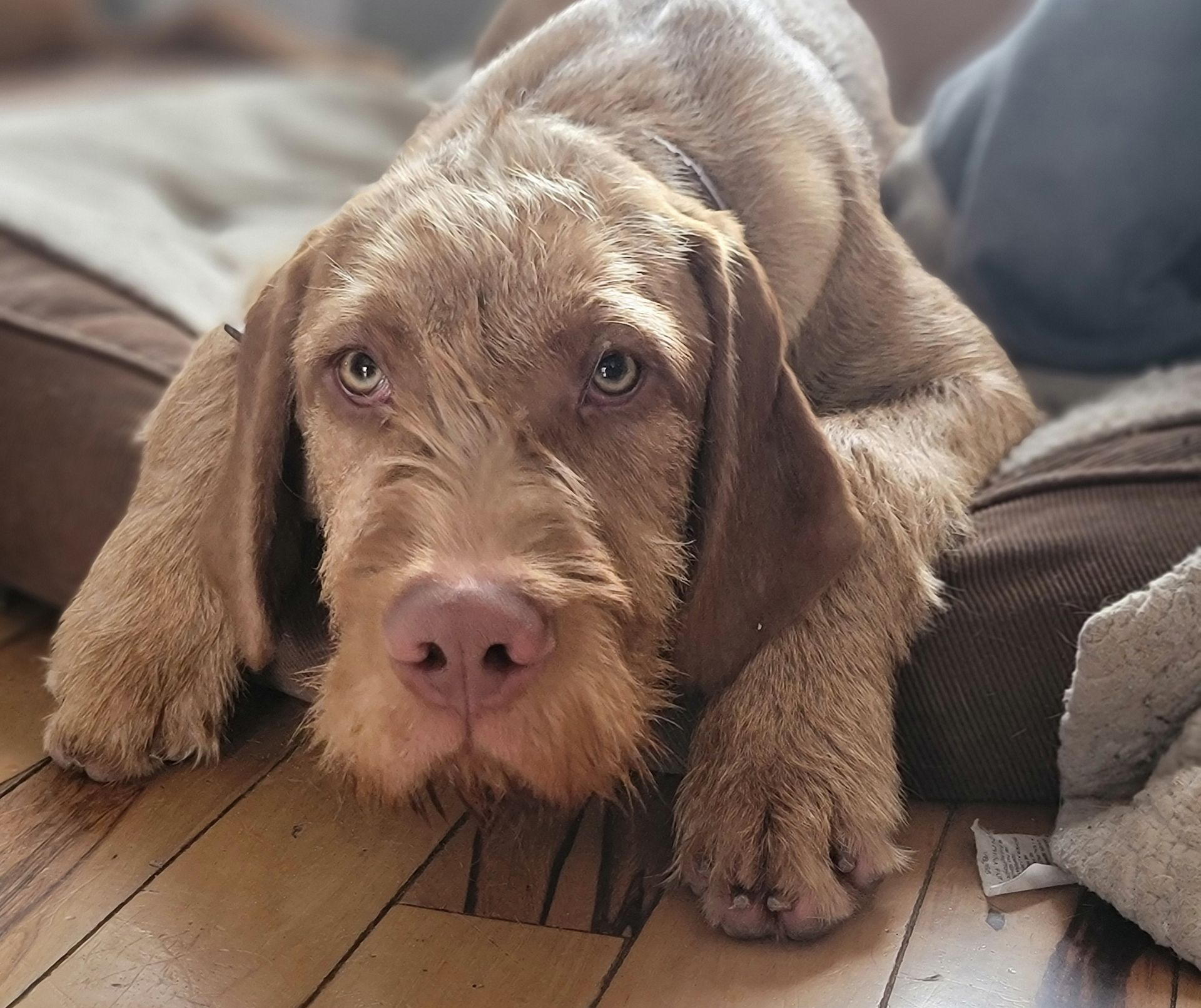
The Hungarian Wirehaired Vizsla has a distinctive coat that is one of the characteristics that sets the breed apart. Their coat is dense and wiry, with a noticeable beard and furnishings around the face that contribute to their rugged appearance. The coat was developed to provide protection while these versatile hunting dogs work outdoors in different conditions. At Pivot Kennels, the Wirehaired Vizsla is appreciated not only for its hunting abilities but also for the way its unique coat contributes to the breed's overall character and appearance.
The wiry coat can make the breed look very different from a smooth-coated Vizsla, but that does not mean it functions like a non-shedding or allergy-friendly coat. Wirehaired Vizslas can shed, and loose hairs can carry dander and other particles throughout the environment. How much an individual dog sheds can vary, and seasonal changes, grooming habits, health, and the individual dog's coat can all influence what an owner notices. Families researching the breed should therefore look at the entire grooming and household routine rather than assuming that a wiry coat means very little maintenance.
Does a Wirehaired Vizsla Shed?
Yes, Wirehaired Vizslas can shed. Their shedding may not always be as visually obvious as the hair produced by some heavily shedding breeds, but owners should still expect loose hair around the home. The texture of their coat can cause shed hairs to remain within the coat until grooming or movement releases them. Regular brushing and coat care can help reduce the amount of loose material that ends up on floors, furniture, bedding, and clothing.
For anyone researching the question "Is the Wirehaired Vizsla hypoallergenic?", shedding is only part of the answer. A dog that sheds very little can still produce allergens, while a dog that sheds more may not necessarily cause the same level of symptoms in every person. This is why choosing a breed based solely on shedding can create unrealistic expectations. The more useful approach is to consider allergies, grooming, home environment, and your own reaction to individual dogs together.
Why Grooming Matters for Allergy-Sensitive Homes
Good grooming is valuable for every Wirehaired Vizsla, but it can be particularly helpful when a household is trying to keep loose hair and environmental debris under control. Brushing can remove loose coat material before it ends up on furniture or flooring, while routine cleaning can reduce the accumulation of hair and dander in areas where people spend the most time. Grooming also gives owners an opportunity to check the dog's skin and coat for changes that may need attention. Although grooming cannot make a Wirehaired Vizsla hypoallergenic, it can be an important part of maintaining a cleaner and more comfortable home.
Owners should also think about where grooming takes place. If possible, brushing outdoors or in an easy-to-clean area can help keep loose hair from becoming distributed throughout the house. Washing bedding regularly, vacuuming frequently, and cleaning commonly used surfaces can also help reduce the amount of pet-related material in the environment. Pivot Kennels provides information about the breed's coat and care, and prospective owners can also learn more from the existing article, "Grooming Tips for Your Wirehaired Vizsla: Coat Care & Maintenance," when preparing for the practical side of ownership.
Can People With Dog Allergies Live With a Wirehaired Vizsla?
The answer depends heavily on the individual. Some people with mild dog allergies may be able to live comfortably with a particular dog when they take steps to manage exposure, while others may experience significant symptoms even with careful cleaning and grooming. There is no reliable way to promise that a Wirehaired Vizsla will be suitable for every allergy-sensitive person. Spending time around adult Wirehaired Vizslas before making a long-term commitment can provide useful information about how your body responds to the breed.
It is also worth remembering that puppies eventually become adult dogs. A person might spend a short period around a puppy and experience few problems, only to discover that their response changes as the dog grows, spends more time indoors, or develops its mature coat. Families should consider the long-term reality of living with the dog rather than relying on a single short visit. If allergies are a serious concern, discussing the situation with an appropriate healthcare professional before adopting or purchasing a puppy can also be a sensible part of the decision-making process.
Creating a More Allergy-Friendly Home
If you decide that a Wirehaired Vizsla is the right fit for your family despite allergy concerns, there are practical steps that may help manage exposure. These strategies cannot guarantee an allergy-free environment, but they can make it easier to control loose hair, dander, and other materials that accumulate around the home.
Some useful habits include:
- Brush your Wirehaired Vizsla regularly to remove loose coat material.
- Wash dog bedding and blankets frequently.
- Vacuum floors, rugs, and furniture regularly.
- Keep the dog's sleeping area clean and easy to maintain.
- Wash your hands after handling the dog, especially before eating or touching your face.
- Avoid allowing the dog to sleep on pillows or other areas where you spend extended periods.
- Clean high-traffic areas where your dog spends most of its time.
- Consider using washable furniture covers if your dog frequently lounges on couches or chairs.
- Keep grooming tools clean so removed hair and debris do not simply accumulate indoors.
These habits are effective as part of an overall allergen-management routine, but they should not be presented as a cure for allergies. The goal is simply to reduce unnecessary accumulation and exposure. For many dog owners, these practices become ordinary parts of responsible pet care rather than burdensome chores.
The Coat Is More Than Just Appearance
It can be easy to focus on the Wirehaired Vizsla's beard, wiry texture, and distinctive appearance when learning about the breed. However, their coat is connected to their history as versatile hunting dogs and provides protection while they work outdoors. This is one reason understanding the breed's coat properly is more useful than simply asking whether it looks like a "low-allergy" coat. The same characteristics that make the Wirehaired Vizsla recognizable also mean owners should understand its grooming needs and natural shedding.
At Pivot Kennels, the goal is to produce quality Wirehaired Vizslas while paying close attention to health, genetics, temperament, and compatibility. Prospective owners should look beyond coat appearance when deciding whether this breed is right for their lifestyle. A Wirehaired Vizsla can be an energetic hunting partner, an affectionate family dog, and a companion that wants to be involved in everyday life. The important question is not simply whether the coat looks manageable, but whether the entire breed fits your household.
A Family's Allergy Considerations Before Bringing Home a Puppy
Imagine a family that has always wanted a Wirehaired Vizsla but has one family member who occasionally experiences mild reactions around dogs. Rather than assuming the breed will automatically be hypoallergenic, the family spends time around adult Wirehaired Vizslas and pays attention to how that person responds. They also think about the dog's future living arrangements, grooming schedule, cleaning routine, and which areas of the home will be shared with the dog. This approach gives the family a much more realistic picture of what ownership could involve.
That kind of preparation is useful because choosing a dog is a long-term commitment. The goal should not be to find a breed that makes an allergy concern disappear, because no breed can make that promise. Instead, prospective owners can gather information, spend time with the breed, establish practical expectations, and decide whether the dog and household are a realistic match. This same thoughtful approach is important for anyone considering a Wirehaired Vizsla for hunting, family life, showing, or other activities.
Why Getting the Facts Right Matters
Understanding whether a Wirehaired Vizsla is hypoallergenic matters because inaccurate expectations can create problems after a puppy comes home. Someone who believes the breed does not shed or cannot trigger allergies may be surprised by normal coat maintenance and allergic reactions. Learning the facts beforehand allows prospective owners to prepare their homes, understand grooming responsibilities, and have more realistic expectations about life with the breed. Good preparation can ultimately contribute to a healthier and more positive relationship between the dog and its family.
Pivot Kennels encourages prospective puppy owners to understand what comes with getting a Wirehaired Vizsla before making that commitment. Their puppies may be suited for different goals, including hunting, showing, agility, dock diving, or life as a family companion, but every puppy buyer should understand the responsibilities involved. Reviewing the information available through the Pivot Kennels website and asking questions can help families determine whether the breed matches their lifestyle. A responsible breeder should be willing to have those conversations rather than simply focusing on placing a puppy.
Additional Information
If you are researching the Wirehaired Vizsla before bringing one home, Pivot Kennels has several existing resources that can help you learn more about the breed. The Our Dogs information provides insight into how their dogs live as both working and family companions, while Puppies & Breeding offers more information about their breeding approach and what prospective puppy owners should understand. You can also explore the FAQs for additional answers and the Contact page if you have questions that are specific to your family or a future puppy.
For coat-specific information, the Pivot Kennels article "Grooming Tips for Your Wirehaired Vizsla: Coat Care & Maintenance" is a useful companion to this article because it focuses more directly on maintaining the breed's distinctive coat. Their article "What Makes the Wirehaired Vizsla Different from a Smooth-Coated Vizsla?" can also help readers understand why the Wirehaired Vizsla's appearance, coat texture, and characteristics differ from those of the smooth-coated variety. Together, these resources can give prospective owners a more complete picture of what to expect before welcoming a Wirehaired Vizsla into their home.
The Bottom Line on Wirehaired Vizslas and Allergies
So, is the Wirehaired Vizsla hypoallergenic? No, the breed should not be considered truly hypoallergenic, and prospective owners should not rely on its wiry coat as a guarantee of reduced allergic reactions. Their coat can shed and can carry dander and other allergens, even though its texture and appearance are different from many other dog breeds. With realistic expectations, regular grooming, thoughtful cleaning habits, and time spent around the breed beforehand, allergy-sensitive families can make a more informed decision about whether a Wirehaired Vizsla is right for them.
At Pivot Kennels, choosing a puppy is about more than falling in love with a photograph or the distinctive look of the breed. It is about finding a good match between the dog's needs, the owner's expectations, and the lifestyle of the household. If you are considering a Hungarian Wirehaired Vizsla and have questions about their coat, grooming, allergies, temperament, or what to expect from ownership, reach out to Pivot Kennels to ask questions or get started.